New You Week 5: Anticipating Challenges

Week five! So far on our journey, we’ve learned how to:

Now it’s time to get serious about dealing with the very real obstacles on the road to habit change. If you’ve already stumbled in your 2021 goals, it’s time for a fresh start—this time with more tools at hand to help you with the rough patches.

The biggest challenges in habit change can be lumped into two camps.

1. Continuing a negative habit.

This is the “falling off the wagon” scenario in which you’re trying to quit something that doesn’t serve you—perhaps you’re trying to stop smoking, drink less, or avoid foods that you know trigger unhealthy eating. You might be trying to curb your spending, reduce your social media use, or stop being critical of others. But try as you might, one day you give in to the very thing you’ve sworn off.

2. Losing momentum on a positive habit.

This is the opposite scenario, in which you’re trying to start a new positive habit. You might be trying to drink more water, eat more nutritious foods, or exercise more. Perhaps you’re trying to write daily, or develop a meditation practice, or show more gratitude. But try as you might, one day you simply don’t do the very thing you’ve promised to.

One Moment is Not All Moments

Your first approach should be to change the way you feel about obstacles, misfires, lapses, and all other challenges on the way to better habits. You will rarely adopt a new habit perfectly, right away, and this is particularly true of healthy lifestyle changes. Changing your diet, quitting smoking, drinking less alcohol, becoming more active—these are all difficult changes to make. You will almost certainly face challenges.

To this, we say: who cares? Missing one daily walk isn’t a character flaw. Giving in to a less-healthy food choice isn’t going to kill you. 

But what is a problem is letting one bad choice become permission to give up.

One lapse is not a failure. One bad day is not a sentence. Accept that you will face challenges. And plan, right now, to simply get back up each time you fall. This is your habit change, and you get a fresh slate every day if you choose it.

Implementation Intentions 

Psychology has some help for staying the course in the form of implementation intentions. Simply put, this is a plan for when and where you intend to perform a new habit. 

Author James Clear says:

The simple way to apply this strategy to your habits is to fill out this sentence:

I will [BEHAVIOR] at [TIME] in [LOCATION].

  • I will meditate for one minute at 7 a.m. in my kitchen.
  • I will study Spanish for twenty minutes at 6 p.m. in my bedroom.
  • I will exercise for one hour at 5 p.m. in my local gym.
  • I will make my partner a cup of tea at 8 a.m. in the kitchen.

To apply this to a negative habit, try using a substitute behaviour. “When I get the urge to [negative behaviour] I will do [positive behaviour].” The idea is that this pre-planning can interrupt your habit loop enough to get you past the initial urge.

Know Your Triggers and Pitfalls

Habits are neural patterns. They’re wired into your brain in a kind of loop, and every loop has a cue—a signal that initiates the pattern. Stress makes you crave a drink. The chime of your phone causes you to check your messages.

If you observe your negative habits, you can look for the cues that precede them. What happened just before I went down the YouTube rabbit hole? Why did I have the drink I didn’t really want?

Likewise, if you observe the times you stumble on your positive habits, you can ask similar questions. Why did I miss that walk? Why didn’t I make a lunch yesterday?

The beauty of this approach isn’t just that you can avoid future problems, but that you get to treat a “failure” as a way of getting better. Each time your habit change breaks down, you get to learn a way to make your habit stronger in the future. 

As you can tell from the list above, anticipating problems is just that—it’s anticipating. It’s looking ahead and knowing that life happens. That things don’t always go as planned. It’s not expecting that your progress will be perfect or easy. 

We all want to be hopeful. Optimistic. We’re drawn to the failure is not an option attitude. 

When it comes to habits, however, we prefer failure isn’t permanent. Expect that there will be bumps on the habit highway. Take them with all the grace you can. Learn from them.

Then cut yourself some slack and keep on going!

New You Week 4: Habit Stacking

Welcome to Week 4! If you’ve been following along, then you’ll know our journey so far looks like this:

  1. How to Create a New You in 2021
  2. Pick One Thing
  3. Start Small

At this point, it’s not unusual for a few speed bumps to have popped up on the road to better habits. In fact, it’s almost a guarantee that you’ve hit something that slowed your progress or even derailed you altogether.

Forget about it. Really. Every day is a new day. If you fell down yesterday, just pick yourself up and start fresh today. That’s the beautiful thing about personal change: you get to decide the rules. And if you’re the boss, why not be more forgiving? If you stumble, start anew.

But WHY, you ask, does it have to be soooo hard?

Excellent question. And the answer reveals a useful tool for your habit-building toolbox.

Getting “Triggered”

If you’ve read Charles Duhigg’s excellent book The Power of Habit (summary), then you’ll know that habits are reinforcing loops that have triggers. A stressful event, for example, might trigger a habitual response, like smoking, or eating something sweet.

One of the challenges with getting your new habit to stick is that it’s not linked to any triggers yet. If you’re trying to drink more water, for example, you might find you simply…forget! You might even have a bottle full of water on your desk but realize at the end of the day that you’ve hardly touched it. 

For all your good intentions, without someone or something to prod you to actually do the habit, it simply falls by the wayside. 

Habit Stacking

One way to combat this is with habit stacking. Using this technique, you “piggyback” your fresh and very fragile new habit on top of something else that has a more established routine.

Let’s take a closer look at that “drink more water” habit. What if we tried to piggyback your desired action (drinking water) with something specific that you already do? 

Here’s how that can work.

If you’re like most people, you start your day with a cup of coffee or tea. You stumble bleary-eyed into the kitchen, turn on the coffee maker, and wait patiently for that first cup. Most people do some variation of this every single morning of their adult life

Now: what if you put a glass of water beside the coffee maker?

That’s it. 

When you stumble out to the kitchen, what’s the first thing you see? The glass. You hit the button on the coffee maker, drink your glass of water, and there, just like that, you’re already ahead of the game. You’ve won the day!

That’s just one glass of water. But what if you put a glass next to the sink in the bathroom? What would happen then? 

What if you put an empty glass next to every tap in your house, and make a point of drinking a glass of water each time you enter that room? It might not work every time, but sometimes that little reminder attached to another habit is all you need.

What Existing Habits Can You Use?

To make habit-stacking work, you need to look for your existing patterns. What do you do every day no matter what? What do you do multiple times a day, every day? 

Once you’ve identified a few, look for ways to stack a new habit:

  • Take a short walk after dropping your kids at the bus stop
  • Do five pushups each time you leave the bathroom
  • Think of something you’re grateful for each time you brush your teeth
  • Stretch for five minutes each time you put your pyjamas on

How can you attach the habit you want to the habits you have?

Recommended reading: Atomic Habits by James Clear

New You Week 3: Start Small

Last week we asked you to take your hopes for change and distill them into one thing. Trying to do everything at once is a quick way to sputter out.

Now that you’ve got one area to focus on, how will you change it? Our suggestion is to a) start small, and b) make it positive. 

1. Start small.

Tiny changes are sustainable. Big changes often aren’t. Can you make a change so small that it’s almost impossible to not do? 

For example, instead of deciding to work out for an hour every day at the gym, could you do a ten-minute walk every day? That may not seem like much, but a year from now, do you want to be the person who walked every day or the person who gave up going to the gym two weeks into the new year?

Keep it simple. Focus on something small enough that you think you can do it every day. In many ways, every day is easier. There’s no bargaining. There’s no deciding which days count as off days. There’s no game-playing. It’s impossible to fool “every day”; you either did it or you didn’t. 

Set the bar low. It’s easy to raise it as your habits solidify.

2. Make it positive.

It’s often easier to add something positive rather than take away something negative. Can you substitute a walk with a friend for watching the news? Can you replace one less-healthy meal with something you make yourself?

Keep it small, and make it positive. Tiny habits are sustainable, growable, and approachable. 

Your goal to transform your diet to the latest version of perfect is probably not sustainable. But what if you changed one meal? Can you do that? Can you choose to make your own lunch instead of eating out every day? Or, if that’s too big, how about you choose to eat a healthier lunch on Monday. That’s it. 

Can you add Tuesday? Of course you can.

Recommended reading: Tiny Habits by BJ Fogg

New You Week 2: Pick One Thing

We’ve all felt the excitement of a New Year’s resolution before.

But we’ve also all felt the disappointment when our big goals didn’t come to fruition.

Often, our failure to make change is because we try to do too much at once. This is particularly true of lifestyle changes. We vow to wake up early, change our diet, exercise regularly—all starting January first. 

It’s too much. We’re setting ourselves up for failure. 

Successful change is about consistent doing

A daily exercise habit isn’t about the right workout clothes or a new watch. Those might be helpful in some way, but they don’t do the exercise for you. A new cookbook can help, but it won’t make a healthy dinner while you read.

Successful change is about doing. But doing too much isn’t helpful. Yes, some people have epiphanies and change their lives overnight. But far more often, success is the slow compounding of small sustainable changes that become regular habits. And that job is a lot easier when you don’t try to change everything at once. 

What’s your one thing?

Last week we asked you what does your future self need most?

If you’re like most people, you probably had a number of answers. 

Can you pick just one?

Pick just one area of your life to improve. Is it your diet? Your finances? Your activity level?

Just. Pick. One. 

One is something you can get your arms around.

One is something you can put a dent in.

One is enough.

Because if you can change one thing…you can change anything. 

What’s your one thing?

Recommended reading: The One Thing by Gary W. Keller and Jay Papasan.

Feed Your Mind

As naturopathic doctors, we love food. For us, food is medicine. It’s a tool to make your body stronger, more resilient. Food, it turns out, helps you feel better. 

Of course, that’s more true of some foods than others. Whole foods beat highly processed ones. Home cooking beats restaurants. Vegetables beat sugar.

In short, a big part of our philosophy is that if you feed your body well, it will give you back better health in return.

The same is true of your mind. The things you watch, hear, read, and dwell on are the food of the mind. And as with the food you eat, some mental foods are better than others. When it comes to mental health, books beat newspapers. A great movie beats the news. A positive quote beats a fearful tweet.

Feed your mind properly, and it will give you a happier, healthier mind in return. 

This is a big week for many. It’s back to school after a long absence. It’s a chance to pack healthy lunches for kids, and maybe revisit your own lunch. For many of us, back to school is a New Year of sorts. A new beginning that comes every September.

So while you’re working on feeding the body, why not give a little thought to how you feed your mind? 

What’s one ingredient in your mental diet that you’d be better off without?

(And if all else fails, this video of a baby wolf howling is guaranteed to cleanse your mental palette…)

Are Your Vitamin D Levels Too Low?

It’s the time of year when we often look to vitamin D levels in our patients, and for good reason–low levels of the “sunshine vitamin” have been linked to a host of conditions, including seasonal affective disorder and osteoporosis.

We wrote about the interesting history and importance of vitamin D before, but new research is showing vitamin D matters for more than just building strong bones and keeping your winter blues away.

Why should you care?

Because you’re Canadian! And as awesome as you are, the dark northern days and indoor lifestyle can mess with your D levels.

According to Stats Canada, only 65% of Canadians have vitamin D levels that are likely sufficient to fulfill the body’s requirements for optimal bone health. Not to mention all that other stuff like infections and depression and thyroid conditions and fatigue and more.

The strategy in conventional medicine to deal with this has been to supplement everyone with vitamin D–the recommendation is 2000 IU/day.  

The challenge is that for some people, that’s enough, for others it isn’t. Taking too much vitamin D for too long is not a good thing either. The best solution is to test your levels so that you know exactly what steps, if any, to take.

The good news is that it’s easy to test your vitamin D levels. Better yet, we have a new Vitamin D shot that can make a big difference to your levels.

To test your vitamin D levels and find the optimal approach for you, just contact us, or book online

Easy Choices…Hard Life?

Easy Choices, hard life. 
Hard choices easy life. 
-Jerzy Gregorek 

Jerzy Gregorek, four-time time World Weightlifting champion and author of The Happy Body, came to the United States from Poland in 1986 as political refugee. His words are worth considering.

The things that feel the easiest—things like sitting in front of the TV, hitting the snooze bottom, putting that new pair of shoes on the credit card, avoiding “the conversation”, eating the chocolate, having the second glass of wine—they are all easy choices on the road to a hard life. It’s a road that leads to chronic disease and disability, poor relationships, and money troubles. 

The things that feel the hardest–things like saving money, dragging yourself out of bed to go for that walk, eating the salad instead of the fries, having the tough conversation with your boss—they’re the more difficult choices, but they lead somewhere much better. When we engage in these things that feel so difficult in the moment, we create health, happiness, and connection for the future.  

What will your future self think about your choices?

Stay conscious, be brave and try to make a decision today—however small—that your future self will thank you for. 

The Collaborative Approach to Inflammatory Bowel Disease (IBD)

IBD, or Inflammatory Bowel Disease, is completely different from its mild-mannered cousin IBS, or Irritable Bowel Syndrome

IBD is a disease process, as opposed to a functional issue. The term captures both Crohn’s disease and ulcerative colitis, both of which involve a chronic, and often severe, inflammation of the digestive tract.

Symptoms of IBD usually involve severe diarrhea, abdominal pain, fatigue, and weight loss.

Causes of IBD are not fully known, but it is thought to be due to a malfunction of the immune system where the inflammatory response does not shut off. 

There are some common risk factors for IBD, like genetics, family history, smoking, and the use of NSAIDs. Interestingly, if you live in an industrialized country, are Caucasian, and live in more northern climates, you are more likely to develop IBD. It may be that some environmental factors, including diet, lifestyle or even vitamin D deficiency, play a role.

IBD can be debilitating and sometimes leads to life-threatening complications like: 

  • Colon cancer
  • Skin, eye, and joint inflammation
  • Primary sclerosing cholangitis
  • Bowel obstruction
  • Malnutrition
  • Ulcers
  • Fistulas
  • Anal fissure
  • Toxic megacolon
  • Perforated colon
  • Severe dehydration

A Combined Conventional and Complementary Approach

Unlike IBS, where a naturopathic approach alone can often have excellent results, IBD presents a different challenge. Because symptoms can be severe, and lead to serious health problems, it can be important with IBD to use conventional medications to manage symptoms and keep things from getting worse.

The trouble is that conventional medications come with their own issues. Many meds have side-effects that range from sleep issues with corticosteroid use to certain cancers with the more serious immuno-suppressive drugs.  

As a result, CAM use (complementary and alternative medicine) in patients with IBD is high, ranging between 21% and 60%

Sick and Tired of IBD

Even with “controlled disease”, patients with IBD often feel sick and tired because they simply aren’t getting enough nutrients. Why?

  • The intestines are inflamed and/or damaged and are not absorbing nutrients effectively.  
  • Chronic diarrhea and pain cause changes in taste and anxiety about eating, so patients just don’t want to eat
  • Some drugs for the treatment of IBD, like the anti-inflammatories, make it harder to absorb nutrients
  • The intestines are sometimes so inflamed that they are bleeding, resulting in blood loss over time, which can lower iron levels and lead to anemia

What Can You Do?

The multiple nutrient deficiencies in patients with Crohn’s or Ulcerative Colitis is well documented. There is less research on the roll of repletion of these nutrients in the IBD literature, although we have seen anecdotal evidence of increased energy, decreased symptoms and longer remissions in our IBD patients who receive regular IV infusions of vitamins, minerals, and amino acids.  

There is also a growing body of evidence for the use of some complementary therapies, including probiotics, curcumin and fish oils. All of these substances help to modulate immune function and decrease inflammation.  

To learn more about naturopathic approaches, including IV therapy, for IBD, contact the clinic at 705-444-5331, or book online.

IBS: How Do You Test for Food Intolerance?

Irritable Bowel Syndrome, or IBS, is surprisingly common. According to the stats, between 13-20% of Canadians are affected by IBS at any given time.

There are many potential causes, but one of the most common is a food intolerance.  

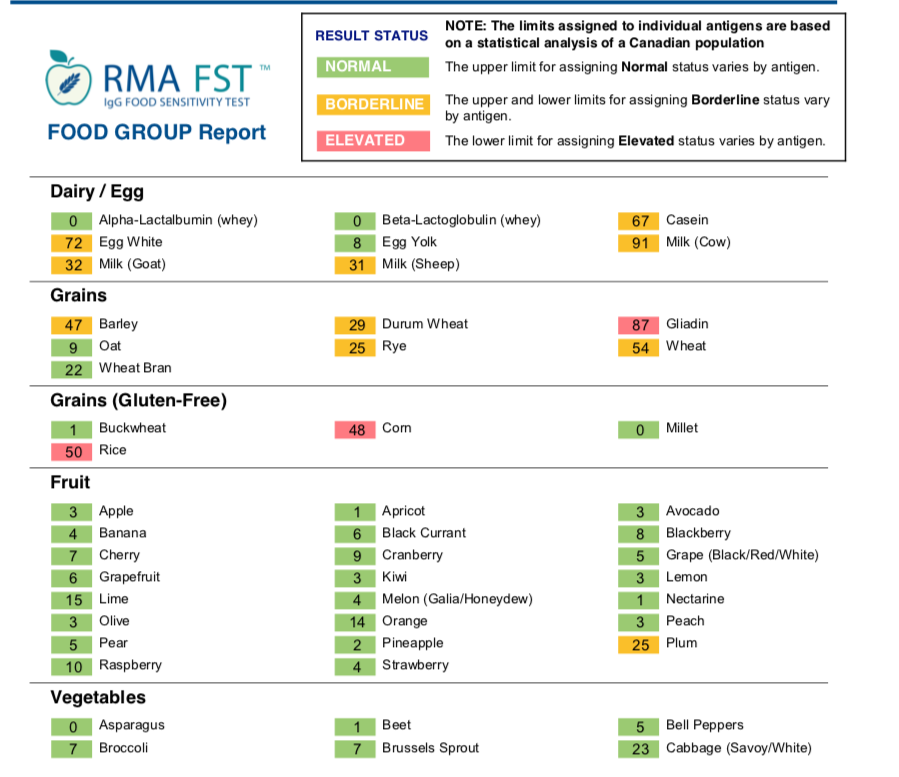
A food intolerance is often a result of what’s called an IgG food sensitivity–a delayed, hyper-sensitivity reaction to a specific food.  

In this immune reaction, an IgG antibody attaches itself to a food protein. This creates an antibody-antigen complex. These complexes are generally removed from the body by special cells, but sometimes there are too many complexes for the body to clean up. When that happens, the antibody-antigen complexes build up and deposit into body tissues, resulting in inflammation that can play a role in many diseases and conditions.  

There is a growing body of evidence to support the clinical benefits of eliminating IgG reactive foods from the diet, especially in IBS. You can find studies, here, here, and here. The trick is to find out if you’re reactive to any foods, and which ones.

How to Find Out if Your IBS is Related to a Food Intolerance

To find out, we use a simple IgG Food Sensitivity blood test covered by many extended benefits. Once you identify your reactive foods, you can try removing them from your diet to see if your IBS symptoms improve!

Related posts:

Building Strong Back-to-School Immune Systems

Kids will be heading back into the classroom next week, and after the initial celebration by parents is over and the weather cools, thoughts turn to avoiding the seemingly inevitable “back to school” cold—both in our kids and ourselves!

Here are some of our best tips and tools as you head back into a new school year.

1. Sleep

Kids are chronically under-slept, and homework, extra-curriculars, and excessive screen time can contribute to the problem. Be mindful of this as the school year begins, and guard this aspect of health. Sleep is where we repair and recuperate—not enough of it means your immune system is more easily overwhelmed.  

How much sleep is enough? Here’s a starting point.

2. Keep them Outside

The school year means being inside. It means more sitting and breathing re-circulated air, surrounded by dozens of other kids. Make sure your kids spend daily time outside moving their bodies (and therefore their blood and immune systems) in the fresh air. It’s a critical part of keeping their immune systems strong and healthy.  

3. Eat for Immune System Success

What does that mean? It’s easy: avoid sugar and go for the healthy proteins. Here are some ideas that kids love.  

4. Supplement

We love Fit For School probiotics by Genestra which includes, probiotics, vitamin C and vitamin D, or MetaKids chewable probiotic only. Both are pretty yummy, but if you aren’t sure if your kids will like them, drop by the clinic. We always have a bottle/package open for a sample!

More:

::Back to School Advice from the StoneTree Naturopaths